

Article: 5G Radiation Protection: What Samsung Galaxy Users Should Know
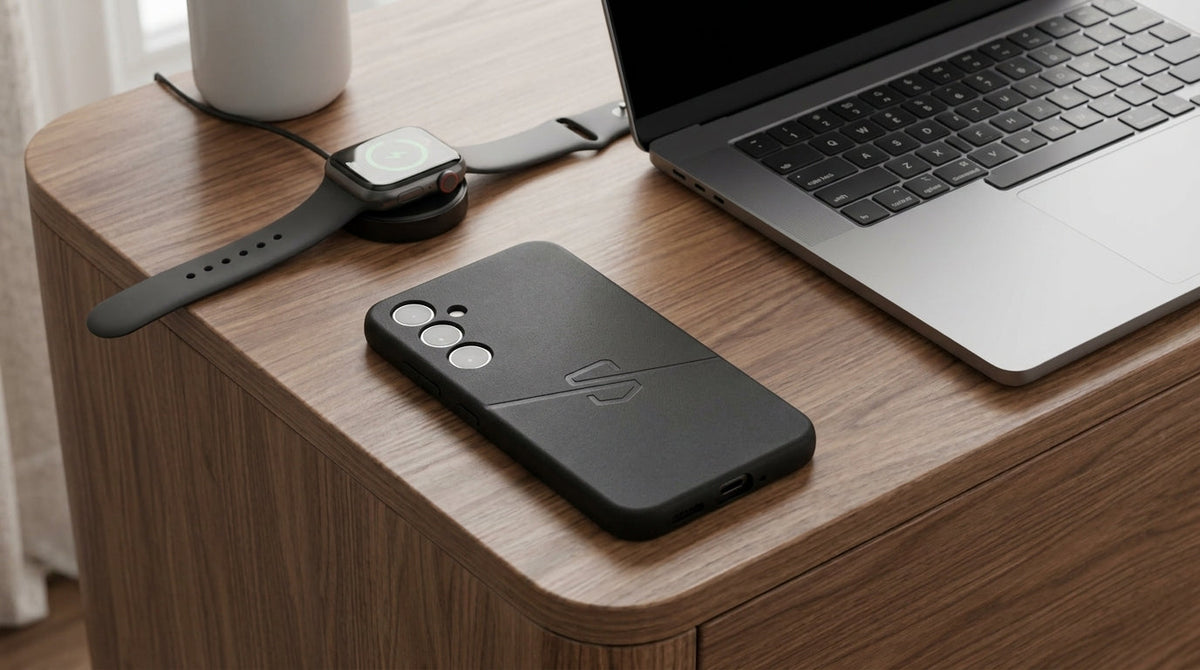
5G Radiation Protection: What Samsung Galaxy Users Should Know
Modern smartphones have become part of almost every aspect of daily life, from communication and work to navigation, entertainment, and online shopping. As a result, questions about 5G radiation protection and everyday exposure to radiofrequency electromagnetic fields (RF-EMF) have become increasingly common among Samsung Galaxy users.
5G technology allows smartphones to communicate using radiofrequency signals across a range of frequencies. According to the World Health Organization (WHO), current research has not established a causal link between exposure to wireless technologies and adverse health effects, although research into longer-term exposure continues.
For people who still prefer to take practical steps to reduce their personal exposure, simple habits such as increasing distance from the phone can be useful. Another option is a purpose-designed phone case that incorporates shielding technology without preventing normal smartphone functions.
For Samsung Galaxy owners, this raises an important question: can an EMF-focused case provide an additional layer of protection without compromising 5G, Wi-Fi, charging, cameras, or the S Pen?

What Is 5G Radiation?
The term "5G radiation" can sound alarming, but it is important to understand what it actually means.
5G uses radiofrequency electromagnetic energy to transmit information between smartphones, antennas, and wireless networks. This type of radiation is non-ionizing radiation, which is different from ionizing radiation such as X-rays.
The WHO explains that 5G networks can operate across different frequencies, including around 3.5 GHz and potentially higher frequencies. At higher frequencies, radiofrequency energy penetrates less deeply into tissue and is absorbed more toward the surface.
The established interaction mechanism for radiofrequency fields at sufficiently high exposure levels is tissue heating. However, the WHO states that exposure from current wireless technologies produces only negligible temperature increases when levels remain within applicable guidelines.
This distinction matters because responsible 5G radiation protection should be based on understanding the technology rather than treating all electromagnetic radiation as the same.
Should Samsung Galaxy Users Be Concerned About EMF?
Research into mobile phone radiofrequency exposure is ongoing, but major health organizations do not currently conclude that ordinary exposure from compliant mobile devices causes established adverse health effects.
The U.S. Food and Drug Administration (FDA), for example, states that the weight of scientific evidence has not linked radiofrequency radiation from cell phones with health problems.
At the same time, people may reasonably want to minimize their personal exposure as a precaution or simply because they spend many hours using their phones.
Practical ways to reduce exposure can include:
- Using speaker mode or headphones during longer calls
- Keeping the phone farther away from your body when possible
- Avoiding prolonged calls when the phone has a weak signal
- Carrying your phone in a bag rather than directly against your body when practical
- Using Wi-Fi when appropriate and available
- Limiting unnecessary phone use when you do not need the device
Distance is particularly relevant because radiofrequency field strength decreases as you move farther from the source.
5G Radiation Protection Without Giving Up Your Galaxy Features
One of the biggest concerns with protective phone accessories is functionality.
Samsung Galaxy users typically expect their phone case to work seamlessly with features such as:
- Wireless charging
- Fast cable charging
- 5G connectivity
- Wi-Fi
- Cameras and sensors
- Buttons and ports
- S Pen functionality on compatible Ultra models
A case that interferes with these features can quickly become more frustrating than useful.
This is why the design of an EMF-focused case matters. Rather than simply adding a thick layer of material around the entire device, some products are engineered to place shielding material in specific areas.
The goal is to provide additional shielding while maintaining normal access to the phone's essential components.

How Samsung Galaxy EMF Cases Are Designed
Samsung Galaxy EMF cases can use different approaches to electromagnetic shielding. Their effectiveness depends on the materials, construction, testing methodology, phone model, and the way the case is used.
The Safe Case® takes a back-shielding approach. According to the manufacturer, its Samsung collection incorporates patented five-layer shielding technology directly into the back cover and is designed to redirect up to 85% of radiation away from the user's body.
The concept is relatively straightforward: instead of attempting to block every signal around the phone, the case focuses shielding toward the side of the device facing the user.
This is particularly relevant for people who regularly hold their Samsung Galaxy against their body or close to their head.
It is also important to distinguish between reducing exposure in a particular direction and completely eliminating electromagnetic radiation. A phone still needs to communicate with cellular and Wi-Fi networks, so a case should not be understood as making a smartphone "radiation-free."
Can an EMF Case Affect 5G or Wi-Fi?
This is one of the most important questions to ask before purchasing a protective case.
A phone case should not make unrealistic promises about eliminating all RF energy while simultaneously maintaining perfect wireless connectivity. Smartphones rely on radiofrequency signals to communicate with cellular networks, Wi-Fi routers, Bluetooth devices, and other technologies.
Poorly designed shielding could potentially affect how a device communicates with its surroundings.
The Safe Case® is specifically designed as a back-shielding solution, rather than a fully enclosed Faraday-style enclosure. According to the manufacturer, the design is intended to provide shielding while allowing normal 5G and Wi-Fi connectivity.
For consumers, the practical takeaway is simple: when comparing Samsung Galaxy EMF cases, look beyond the headline percentage and consider how the shielding is constructed and whether independent testing or technical documentation is available.
What About Wireless and Fast Charging?
Charging compatibility is another important consideration.
Many Samsung Galaxy users rely on wireless charging throughout the day, while others use fast cable charging. A protective case should therefore be designed around the phone's existing charging ecosystem rather than forcing users to remove the case every time they charge.
The Safe Case® collection is designed to support wireless charging and fast cable charging, while maintaining access to the phone's buttons, cameras, sensors, and, on compatible Ultra models, the S Pen.
For anyone comparing cases, it is worth checking compatibility with the exact Galaxy model rather than assuming that a case designed for one Samsung device will work with another.

A Practical Approach to Reducing Everyday EMF Exposure
You do not necessarily need to change the way you use your smartphone dramatically.
Instead, consider combining everyday habits with accessories designed around your needs.
1. Increase distance when possible
The simplest strategy is often physical distance. During long calls, use speaker mode or headphones instead of holding the phone directly against your head.
2. Avoid unnecessary prolonged contact
If you do not need your phone directly against your body, consider keeping it in a bag or on a nearby surface.
3. Pay attention to signal conditions
Mobile phones can adjust their transmission power depending on network conditions. Keeping calls shorter when you have a very weak signal is one practical precaution.
4. Choose accessories carefully
If you want additional shielding, look for a case that clearly explains its technology, compatible phone models, charging capabilities, and testing claims.
5. Keep the science in perspective
EMF discussions can easily become exaggerated online. The WHO and FDA currently state that available evidence has not established adverse health effects from ordinary exposure to radiofrequency energy from wireless technologies when exposure remains within established limits.
That means consumers can make precautionary choices without assuming that everyday smartphone use has been proven to be dangerous.
Why the Safe Case® May Be Worth Considering
For Samsung owners who want to take a precautionary approach to everyday RF exposure, the Safe Case® combines shielding technology with a conventional slim phone-case format.
Its Samsung collection is designed around several common concerns:
- Patented five-layer shielding technology
- Back-shielding design
- Manufacturer-stated redirection of up to 85% of radiation away from the body
- Compatibility with 5G and Wi-Fi according to the manufacturer
- Support for wireless and fast cable charging
- Precise openings for cameras and sensors
- Access to buttons and other controls
- S Pen accessibility for compatible Galaxy Ultra models
You can explore the manufacturer's Samsung Galaxy Safe Case options and technical information here: Samsung Galaxy Safe Case® with EMF protection
The key is to view the case as one part of a broader approach to managing personal exposure, not as a replacement for understanding how smartphones and radiofrequency technology actually work.

What Does the Science Say About 5G?
When discussing 5G, it is useful to separate established scientific findings from consumer concerns and marketing claims.
The WHO reports that, to date, no adverse health effect has been causally linked with exposure to wireless technologies. It also notes that relatively fewer studies have specifically examined some of the frequencies used by newer 5G networks, which is one reason research continues.
The WHO's broader information on electromagnetic fields similarly explains that the scientific evidence available to date does not confirm health consequences from low-level EMF exposure.
For additional educational reading, consumers can review:
- World Health Organization — 5G mobile networks and health
- World Health Organization — Electromagnetic fields
- FDA — Cell Phones and Radiofrequency Radiation
These sources are useful because they provide context beyond product marketing and help consumers understand what is currently established and what remains under investigation.
Choosing the Right Samsung EMF Case
If you are considering a protective case for your Galaxy phone, focus on more than the word "radiation."
Look for:
1. Clear shielding technology — Understand where the shielding material is located and how it is intended to work.
2. Model compatibility — Make sure the case is specifically designed for your Galaxy S-series, A-series, or Ultra model.
3. Charging compatibility — Check whether wireless and fast charging work with the case installed.
4. Connectivity — Look for information about maintaining normal cellular, 5G, and Wi-Fi functionality.
5. Usability — Camera access, buttons, ports, and S Pen functionality should remain practical.
6. Transparent claims — Be cautious of products that promise complete elimination of radiation or guaranteed health outcomes.
A good purchasing decision starts with understanding exactly what a product is designed to do.
Making a More Informed Choice
Questions about 5G radiation protection do not have to lead to an all-or-nothing approach. For most Samsung Galaxy users, the practical starting point is understanding how radiofrequency exposure works and adopting simple habits such as increasing distance from the phone during longer periods of use.
For those who want an additional precaution, a purpose-designed EMF case can be another option to consider. The Safe Case® uses a back-shielding design with patented five-layer technology and is designed to work alongside everyday Galaxy features, including 5G, Wi-Fi, wireless charging, and fast charging.
When comparing Samsung Galaxy EMF cases, focus on transparent information about the shielding design, testing, phone compatibility, and everyday functionality rather than relying on broad claims.
The goal isn't to make your smartphone experience more complicated. It's to understand your options and choose an approach that fits comfortably into the way you already use your Galaxy.

