

World Cancer Day (February 4): How Lifestyle Choices Influence Cancer Risk in the Modern World

Every year on February 4, the world observes World Cancer Day — a global reminder that cancer is not only a medical condition but also a societal and lifestyle challenge.
While genetics certainly play a role, modern science increasingly confirms that lifestyle factors significantly influence cancer risk. This does not mean that cancer is ever a person’s fault. It means that prevention, awareness, and daily habits matter more than ever before.
The Modern Lifestyle and Cancer Risk
Over the past 30 years, human biology has been exposed to conditions that were largely unknown to previous generations.
- Research consistently links increased cancer risk with:
- Chronic stress
- Poor sleep quality
- Processed and inflammatory diets
- Sedentary behavior
Long-term exposure to environmental and technological radiation
Individually, each factor may seem manageable. Combined over decades, however, they create a biological environment of chronic cellular stress and systemic imbalance.
Cancer is a complex, multifactorial disease. But it often develops in environments where the body’s repair systems are persistently challenged.
Radiation Exposure in the Digital Era
One of the most debated and researched areas today is long-term exposure to radiofrequency (RF) radiation from mobile devices.
Unlike 30 years ago, smartphones are now in constant contact with the human body — in pockets, hands, near the head, and sometimes even against the chest for extended periods.
International health agencies classify radiofrequency electromagnetic fields as possibly carcinogenic to humans (Group 2B), meaning that scientific investigation is ongoing and caution is warranted.
The Japanese Case That Raised Questions
A widely discussed medical case involved a woman in Japan who reportedly developed a rare tumor in an area where she had carried her mobile phone in her bra for extended periods over several years.
While isolated cases cannot prove direct causation, they raise important scientific questions about localized, long-term exposure to RF radiation and biological tissue.
Similar discussions have emerged regarding long-term, intensive mobile phone use near the head and potential associations with certain brain tumors after many years of heavy exposure.
The scientific community continues to study these patterns. In the meantime, many health experts recommend simple precautionary measures:
- Avoid direct body contact when possible
- Use speaker mode
- Use air-tube headsets instead of traditional wired earbuds
- Avoid sleeping with the phone next to the head
- Reduce unnecessary exposure when signal strength is low (when radiation output increases)
These are not fear-based recommendations — they are precautionary strategies.
Cellular Stress and Biological Balance
Cancer does not develop overnight. It often results from accumulated cellular damage combined with weakened repair mechanisms.
Modern lifestyle stressors — including digital overstimulation and artificial light exposure — can influence hormonal balance and sleep cycles. Even blue light exposure from screens, particularly at night, may disrupt circadian rhythm and melatonin production, indirectly affecting overall biological recovery processes.
The body is remarkably resilient. But it is not designed for constant, 24/7 technological exposure without recovery.
Prevention Is Awareness, Not Fear
It is important to state clearly:
Not all cancers are preventable. Not all risk factors are controllable.
However, research suggests that a significant percentage of cancer cases worldwide are linked to modifiable lifestyle factors.
Prevention includes:
- Managing chronic stress
- Prioritizing restorative sleep
- Maintaining a nutrient-dense diet
- Staying physically active
- Reducing unnecessary environmental and technological exposure
Small, consistent decisions compound over time.
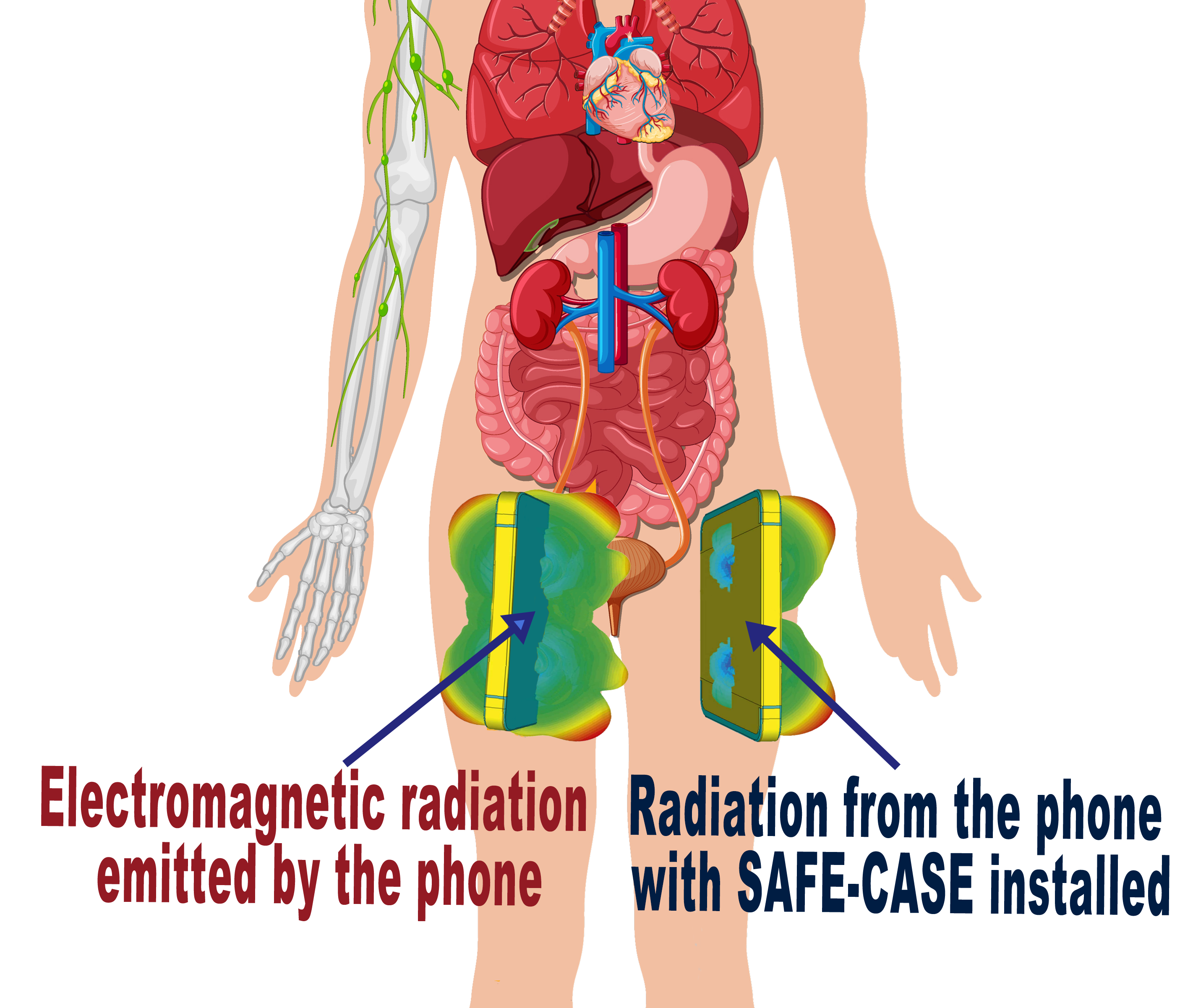
In the context of digital living, solutions designed to reduce direct radiation exposure to the body — such as EMF-shielding technologies that protect the body-facing side of a smartphone — represent one layer of precaution.
Products like SAFE CASE, engineered to reduce radiation exposure from the back side of the phone (the side closest to the body), are part of a broader preventive approach: maintaining connectivity while minimizing direct exposure.
Technology is not the enemy. Uncontrolled exposure without awareness can be.
A Message of Support on World Cancer Day
On this World Cancer Day, our message is twofold:
- Awareness and prevention matter.
- Compassion matters even more.
To everyone currently fighting cancer, to families supporting loved ones, and to medical professionals dedicating their lives to care — your strength inspires us.
Cancer prevention begins with knowledge.
Health begins with balance.
And responsibility begins today.
![No Magic, Just Science: How Our Patented [MK914123] Case Truly Protects You from Mobile Phone Radiation 🛡️](http://safe-accessories.com/cdn/shop/articles/5-layer_84cd5062-8e17-4ceb-b7ca-8b6e9b1ee1b5.png?v=1787780095&width=1141)
